Branding
May 21, 2026

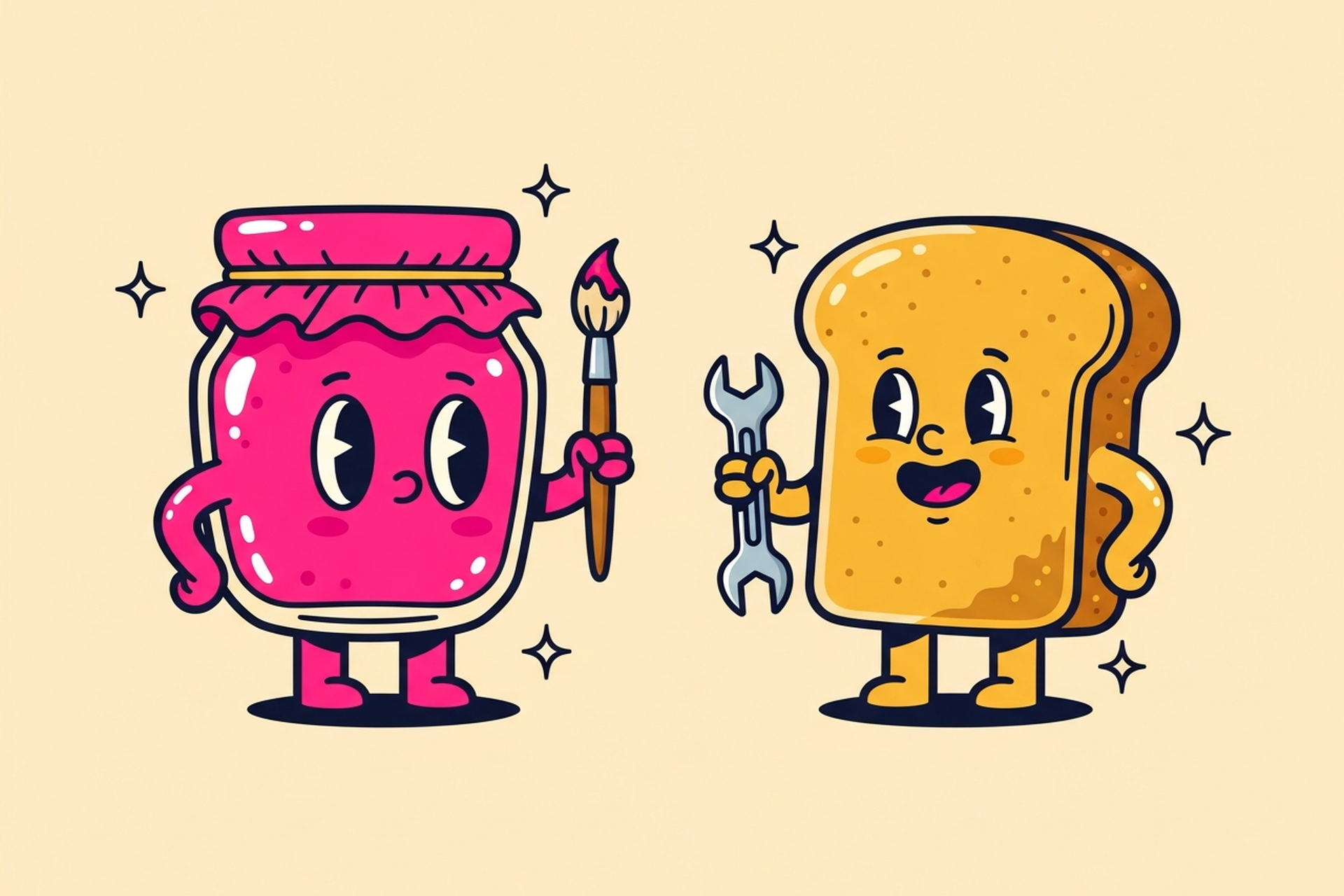
You've decided your website needs serious work. Now you're looking at vendors and noticing something confusing: some call themselves "web development firms," some call themselves "design agencies," and a lot of them seem to claim both. What's actually the difference, and does it matter?
It matters more than you'd think. Hiring the wrong type of partner doesn't just mean getting a mediocre result. It means investing months of time and a meaningful chunk of budget into a project that solves the wrong problem.
A web development firm's core output is working software. Their team is built around engineers: front-end developers, back-end developers, database architects, and QA specialists. When they take on a project, they're thinking about how it functions.
That means performance, security, integrations, scalability, and code quality. It means database architecture, API connections, and deployment pipelines. A web development firm can build you an application that does complex things reliably.
What they're often less focused on: how it looks, how it feels to use, and whether it communicates the right things about your brand. That's not a criticism; it's just not their primary output. You wouldn't hire a contractor to design your house and expect an interior decorator.
Many web dev companies will bring in freelance designers or use pre-built UI component libraries to fill the visual gaps. That works for some projects. For others, it shows.
A design agency's core output is how something looks, feels, and communicates. Their team is built around visual thinkers: brand strategists, UI/UX designers, copywriters, and sometimes motion designers.
When a design agency takes on a website project, they're thinking about hierarchy, color psychology, typography, conversion flow, and brand consistency. They're thinking about the story your site tells and whether a first-time visitor understands what you do in 8 seconds.
What they're often less focused on: whether it performs well under load, how it integrates with your CRM, or whether the CMS is maintainable without their help. Good design agencies know their limits and partner with developers. Less rigorous ones hand you a beautiful prototype that's painful to build.
This is where it gets messier. The web industry has spent a decade blurring these lines, for good reason.
A Webflow development agency, for example, sits in between: the tool is visual, but using it well requires real technical knowledge. Webflow agencies tend to be designers who code, which is a different skill profile than traditional web dev firms. They can often deliver what a smaller business needs without commissioning a full engineering project.
Similarly, many design agencies have grown into full-service shops that handle both design and development in-house, either by hiring hybrid talent or by operating two distinct departments. When it works, this is the cleanest outcome. When it doesn't, you often end up with design and development teams that don't communicate well enough to ship a coherent product.
The fastest shortcut: ask yourself whether your project is primarily an engineering problem or primarily a perception problem.
Engineering problems: your current site crashes under load, your checkout flow is broken, you need a custom application built, you need complex integrations with third-party tools. These point toward a web development firm.
Perception problems: your site doesn't convert, your brand looks out of date, first-time visitors can't figure out what you do, your competitors look more credible than you. These point toward a design agency.
Most growing companies actually have both problems at the same time. In that case, you have three paths:
The third option works better than most people expect for early-to-mid stage companies that want design quality without a $150,000 custom development budget.
Pricing models differ in ways that matter for budgeting.
Web development firms typically charge by hour or scope, with rates ranging from $100 to $250/hour for US-based teams and $40 to $80/hour for offshore. Complexity drives cost: more integrations, more custom logic, more QA time.
Design agencies often charge project fees for defined deliverables: brand identity, website redesign, landing page system. A website redesign from a mid-tier design agency typically runs $20,000 to $80,000, with ongoing retainers for iteration and maintenance.
Some founders are discovering that design subscriptions offer a third model: a flat monthly rate for ongoing design work, without project scoping or retainer negotiations. Jamm is one example of this: a subscription that gives you senior design work at a flat rate, with one active request moving at a time and approximately 2 business days per request. No project kickoffs, no SOW negotiations.
For companies that need a steady flow of design work, that model is often more efficient than a series of project engagements.
Book a call if you want to talk through what kind of design support your current project actually needs.
One common mistake: hiring both a design agency and a web development firm without clearly defining who owns what.
In theory, this should work. Design agency produces the visual design system and mockups; dev firm builds it. In practice, handoffs between teams fail constantly. Design comps that weren't built to developer specs. Development implementations that deviate from the approved design. Revision cycles that spiral because nobody wants to go back to their client saying the other team changed something.
If you go this route, you need a clear contract that defines who owns the source of truth, who approves deviations from the design, and who is accountable if the built product doesn't match the approved mockups.
Alternatively: find one partner who does both, and hold them accountable to both outputs. It costs more upfront, but the project management overhead is dramatically lower.
The vetting process differs depending on who you're evaluating.
For a web development firm, the key questions are technical: What does their QA process look like? How do they handle performance under real load? What happens when a bug is found six months after launch? Ask to speak with clients whose projects are in active production, not just recently launched. Development quality degrades over time if it wasn't done well to start.
For a design agency, the key questions are output-focused: Can they show you before-and-after results, not just beautiful mockups? How do they handle a brand that's already established, not a blank slate? What does their handoff documentation look like for developers? A design agency that produces stunning work that can't be implemented cleanly isn't doing you a favor.
For either, check how they run the project. Agencies that don't give you a clear point of contact, a defined feedback process, and a change management protocol will cost you more in time than they save in money.
The web development firm vs. design agency question ultimately comes down to what kind of output you need right now, and what the gaps in your current situation actually are.
If your product doesn't work, hire an engineering-first firm. If your product works but doesn't convert or communicate well, hire a design-first firm. If you need both, either find a shop that does both credibly or define the ownership boundaries explicitly before you sign anything.
The companies that overpay on this decision are usually the ones who didn't ask the right question upfront.
Start your design subscription and get design in your corner without the agency project overhead.
Hire a team of top level professionals for less money than hiring a single designer. Stupid simple design subscription service to level-up your business!
Looking forward to potentially working with ya ✌️


