Branding
May 21, 2026


Most founders build their brand strategy backwards. They design the logo, then the website, then try to write copy, then realize nobody on the team is describing the company the same way, then go back to figure out what the positioning should have been before the first pixel was placed.
Building a brand strategy from scratch before the creative work starts isn't just tidier. It's faster. It means every design and copy decision has a reference point, and the team stops debating subjective preferences and starts making decisions against an agreed-upon framework.
Here's the step-by-step process.
The first mistake in brand strategy is trying to appeal to everyone. Specificity in audience definition makes every subsequent decision easier and makes the brand more compelling to the people you actually want.
The exercise: Write three distinct audience profiles. For each, define:
You're not committing to serving only these profiles forever. You're creating a clear picture of the person you're designing for when you have to make a tradeoff.
What to avoid: "Our audience is anyone who needs [category]." That's not an audience definition. Make a choice.
Where does your brand sit relative to alternatives? This isn't about features. It's about the territory you occupy in the mind of your target buyer.
The exercise: Map your top 5 competitors along two axes that matter to your audience. Examples: price vs. quality, speed vs. depth, DIY vs. done-for-you, technical vs. accessible.
Where are they clustered? Where is the white space? Your positioning should occupy a distinct territory, not the most crowded one.
The output: One sentence: "For [specific audience], [your brand] is the [category] that [unique positioning], unlike [alternatives] that [how they fall short]."
Write this sentence badly first, then refine it. Getting the rough shape right matters more than the exact wording at this stage.
Your value proposition is the specific, concrete benefit you deliver that others don't. Not "better quality" or "easier to use." Those are table stakes claims. The real value proposition is specific.
The framework:
This isn't tagline copy. It's internal logic that shapes how you talk about the company across every channel.
Brands communicate beyond words. Your color palette, typography, imagery, and tone of voice all carry personality signals. If those signals are inconsistent, the brand feels confused.
The exercise: Pick three to five adjectives that describe how you want people to experience your brand. Then for each: what does this look like in practice? What does it rule out?
For example: "Confident but not arrogant" might mean: making direct statements without hedging (confident), but never dismissing competitors or talking down to the audience (not arrogant). That has real implications for copy, imagery, and design decisions.
Most brands have too many messages and no clear priority. A messaging hierarchy solves this by defining what you lead with, what you support it with, and what you hold in reserve for specific contexts.
The structure:
This hierarchy doesn't constrain creativity. It prevents the incoherence of marketing that tries to say five equally important things at once.
The most important step is also the most skipped: writing it down and getting alignment.
A brand strategy document doesn't need to be long. One page covering audience definition, competitive positioning, value proposition, personality, and messaging hierarchy is sufficient. What matters is that it's agreed upon by the people who make creative and communication decisions.
Without documentation, the strategy lives in the founder's head and diverges with every new hire, agency brief, and campaign.
The process above sounds clean on paper. In practice, a few steps tend to create real friction.
Competitive positioning, when the differentiation feels unclear. Most founders get stuck on the "we're the only company that ___" exercise because, honestly, they're not sure what's uniquely true. If that's where you are, the fix isn't staring at the blank space harder. Talk to your best customers. Ask them directly: "Why did you choose us, and why do you stay?" Their language will tell you things your internal team can't see. They're outside the fog.
Brand personality, when adjectives feel empty. "Confident, approachable, innovative" describes every startup on Earth. To make personality work, push one more step: what would a "confident" brand do when a competitor makes a bold claim? What would an "approachable" brand write for a product error message? Making it concrete makes it useful.
Messaging hierarchy, when everything feels equally important. This usually means the positioning work isn't done. If you can't pick one primary message, it means you haven't committed to what the brand stands for. Force the choice. You can express nuance in the supporting messages.
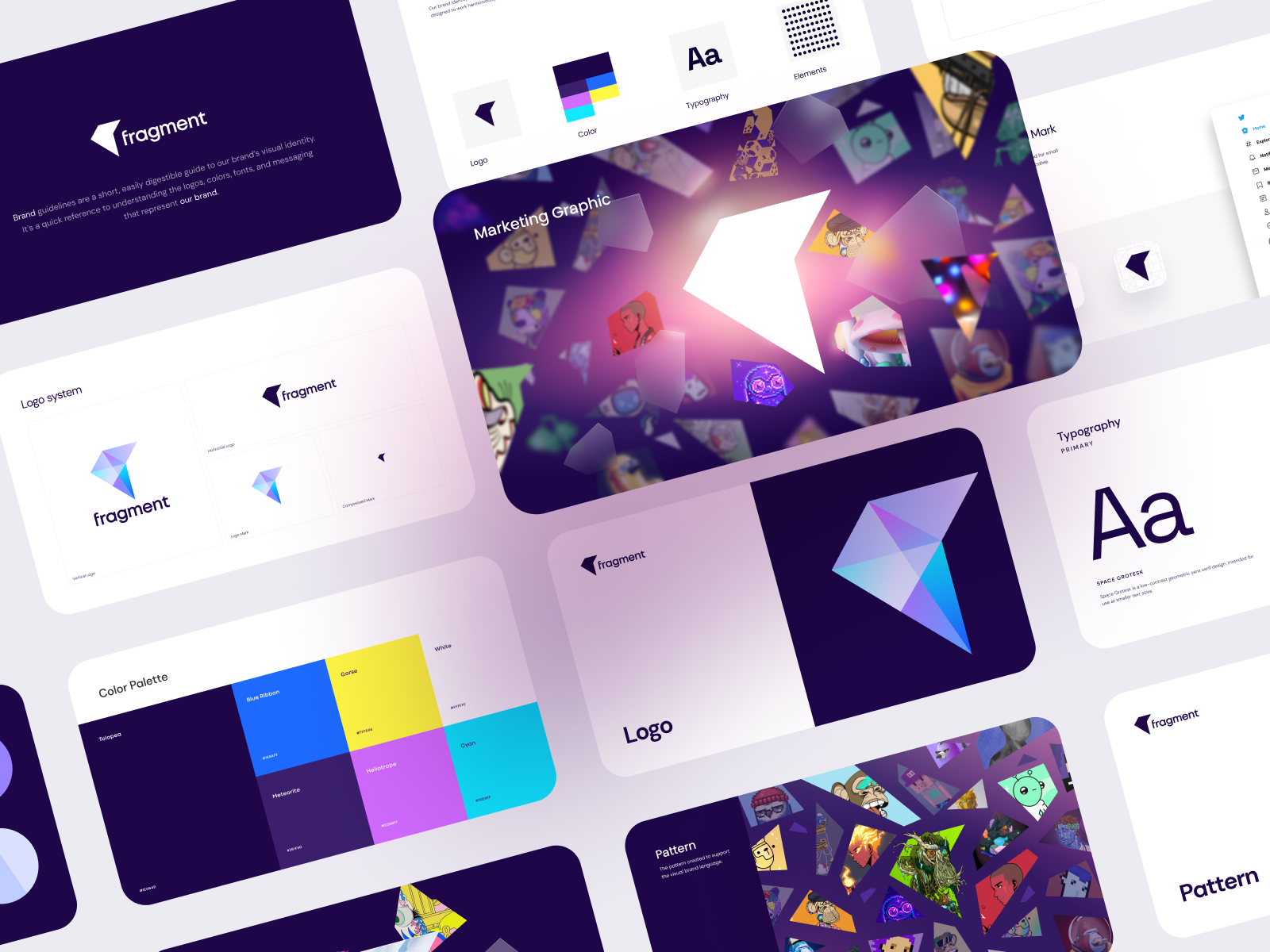
A finished strategy document doesn't need to be long. A clean single page that covers all six steps from above is genuinely enough to brief a visual identity project and keep a whole team aligned.
Once the strategy is clear, the identity work has a brief to execute against. Every design decision (the color palette, the typographic voice, the illustration style) becomes answerable by reference to the strategy. Strategy to identity is where Jamm's work typically begins.
If you've done the strategic groundwork and need a team to execute the visual identity, Jamm handles brand identity work as part of a flat-rate subscription. Book a call to talk through what execution looks like.
Hire a team of top level professionals for less money than hiring a single designer. Stupid simple design subscription service to level-up your business!
Looking forward to potentially working with ya ✌️


