Branding
May 21, 2026


Founders who successfully raised a seed round often make the mistake of updating their seed deck for Series A — changing the numbers, refreshing the traction slide, and resubmitting the same fundamental structure. This rarely works.
A Series A pitch deck is a different document with a different audience making a different decision. Here's what changes.
Seed: Do I believe in this problem, this market, and this team? The bet is on potential — your vision, your insight, and whether you're the right people to execute.
Series A: Does the evidence show this can scale? The bet is on traction — demonstrable product-market fit, efficient growth metrics, and a clear mechanism for deploying capital to accelerate something that's already working.
A seed deck can be heavy on vision and light on data. A Series A deck cannot. Investors at this stage are typically institutional VCs making bigger checks to companies that have to show it's working.
At seed, a traction slide might show early users, a few customer logos, or pre-revenue validation. At Series A, traction is the core argument.
In 2026, sophisticated Series A investors look for:
If these numbers are strong, make them prominent. If they're not yet at Series A benchmarks, be prepared to explain why the trajectory suggests they will be.
A vague "business model" slide works at seed. At Series A, unit economics deserve their own slide with specifics:
These numbers tell a more detailed story than revenue alone. Investors use them to model whether your business can reach profitability and what the return profile looks like.
In 2026, Series A investors want to understand your company's position relative to AI — whether you're building on AI, using AI internally, competing against AI-native startups, or explicitly differentiated by human expertise. Whatever the answer is, it needs to be there. Decks that ignore this question leave investors to fill in the blanks, and they won't fill them optimistically.
At seed, a three-year projection model is largely aspirational. At Series A, investors will poke at the assumptions. How are you modeling growth? What's your historical close rate, and how does your pipeline lead to the revenue projection? Why does your CAC stay flat (or improve) as you scale?
Build the model bottom-up from your current business metrics — pipeline size, close rate, expansion revenue, churn — and let the output be what it is. Investors who believe your assumptions will extrapolate confidently. Investors who don't believe them will discount everything else.
Raise your baseline. A founder-designed deck that got you to seed may feel inconsistent against the quality of company you've become. At Series A, your pitch deck is competing for attention alongside decks that were professionally designed. The bar is higher.
Data visualization matters more. With more data in the deck, the clarity of how you present it becomes critical. A chart that communicates the NDR story in 3 seconds beats a table that requires 30 seconds of reading.
Density should increase, not just slide count. Series A decks often have more slides (15-20 versus 10-12 for seed) because there's more to show — but each slide should still carry one clear argument. More doesn't mean cluttered.
Brand maturity. By Series A, your brand should be developed enough that the deck design reflects it accurately. Inconsistent fonts, off-brand colors, and generic templates are subtle signals that the company hasn't invested in the brand that would be necessary to compete at scale.
The core narrative structure doesn't change: problem, solution, market, traction, team, ask. What changes is the weight of each section. At Series A, traction and unit economics carry the argument. At seed, team and vision do.
The one-job-per-slide rule still applies. Clear headlines that state the conclusion, not describe the content, still work better than descriptive headers.
And the deck is still just a door-opener. The goal of the deck is a first meeting. The goal of the first meeting is a second meeting. The goal of the second meeting is due diligence. Design that supports the narrative and makes the data legible is doing its job.
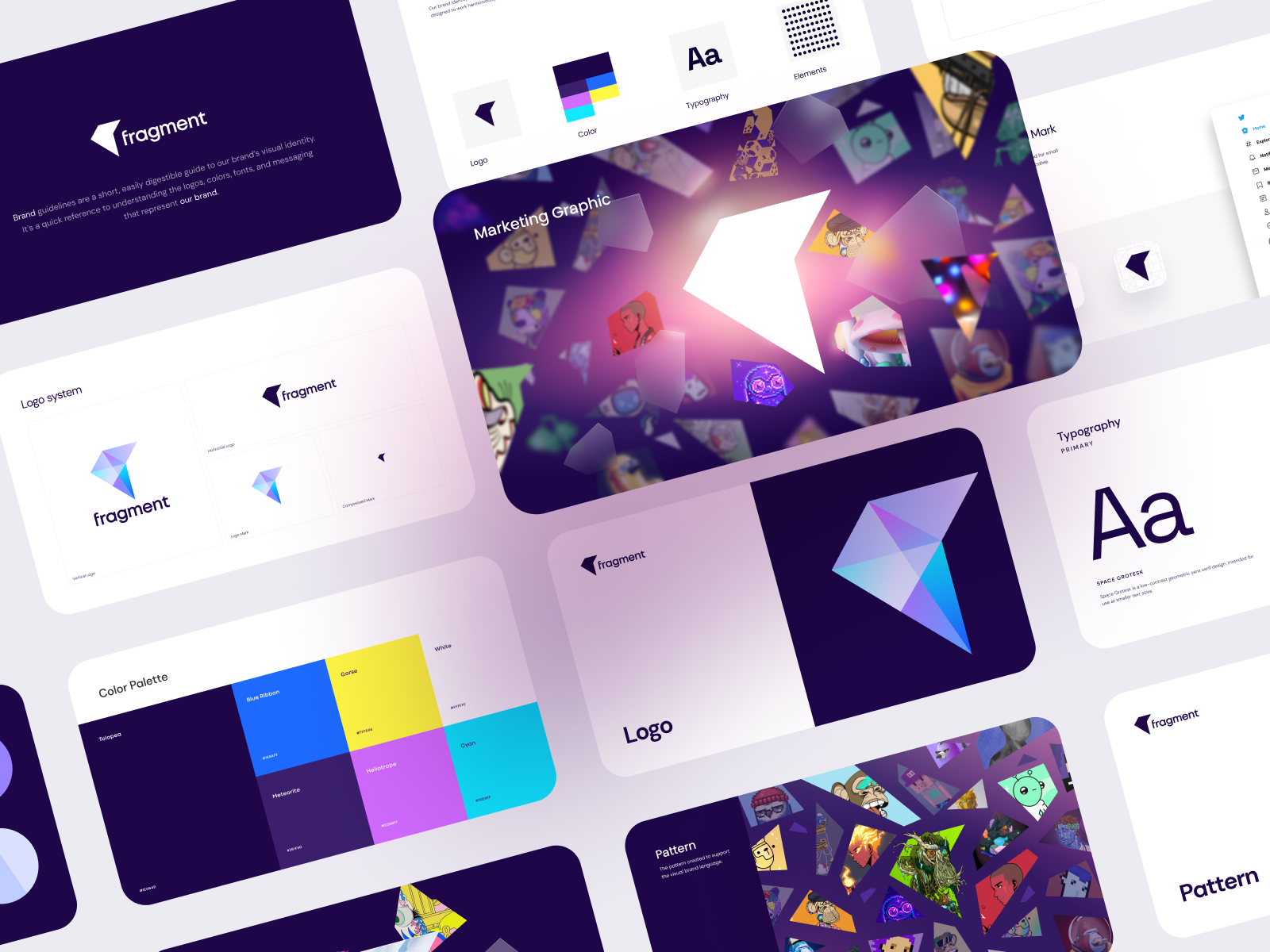
If your Series A deck needs professional design, Jamm produces investor pitch decks as part of a design subscription. See our pitch deck work or book a call before your round launches.
Series A investors are a different audience than seed investors. Most seed checks come from individuals or small funds where one or two people make the call. Series A checks come from institutional funds where multiple partners need to align. That changes how your deck gets used.
Your deck will be shared internally without you. At seed, most investor conversations involve the founder in the room to explain the deck. At Series A, your deck will be passed around a partnership, shown at a Monday meeting, and reviewed by associates who have no context from a prior conversation. Every slide needs to stand alone and tell its story without verbal explanation.
This has a specific design implication: the headline on each slide should state the conclusion, not describe the content. "87% net dollar retention" is a headline that tells the story. "Retention metrics" is a label that tells investors to do their own reading. For institutional review, conclusion-first headlines matter more than they do in a founder-to-investor conversation.
Associates will analyze the numbers before partners see it. At many larger funds, an associate does a first pass on every deck: building out a model, checking the claims, flagging inconsistencies. Design that helps the data analysis — clean charts, labeled axes, clearly sourced figures — reduces friction in this step. Data that's hard to extract from the deck creates friction that can slow the process or introduce errors in the model.
Your deck competes with many others. Institutional VCs at active funds review hundreds of decks each month. Standing out visually matters, but standing out on substance matters more. The design's job at Series A is to make the substance easy to absorb quickly: clear hierarchy, logical flow, data that reads in seconds. Over-designed decks that prioritize aesthetics over readability are working against the goal.
A structure that works consistently: open with the problem and solution (establish context quickly), move to traction as the core argument, use unit economics to prove the business model is healthy, show the market as large enough to justify the check size, and close with team plus use of funds.
The traction section should occupy the most real estate in a Series A deck — more slides, more detail, more data depth than any other section. This is the argument that the bet is no longer on potential alone; it's on demonstrated execution. Everything before and after the traction section supports that core argument.
The team slide, often treated as an afterthought at seed, matters more at Series A because institutional investors are making a larger bet with more due diligence. Deep relevant experience, prior exits, and domain expertise in the specific market all need to be visible without requiring the investor to read a full biography per slide.
Hire a team of top level professionals for less money than hiring a single designer. Stupid simple design subscription service to level-up your business!
Looking forward to potentially working with ya ✌️


