Branding
May 21, 2026

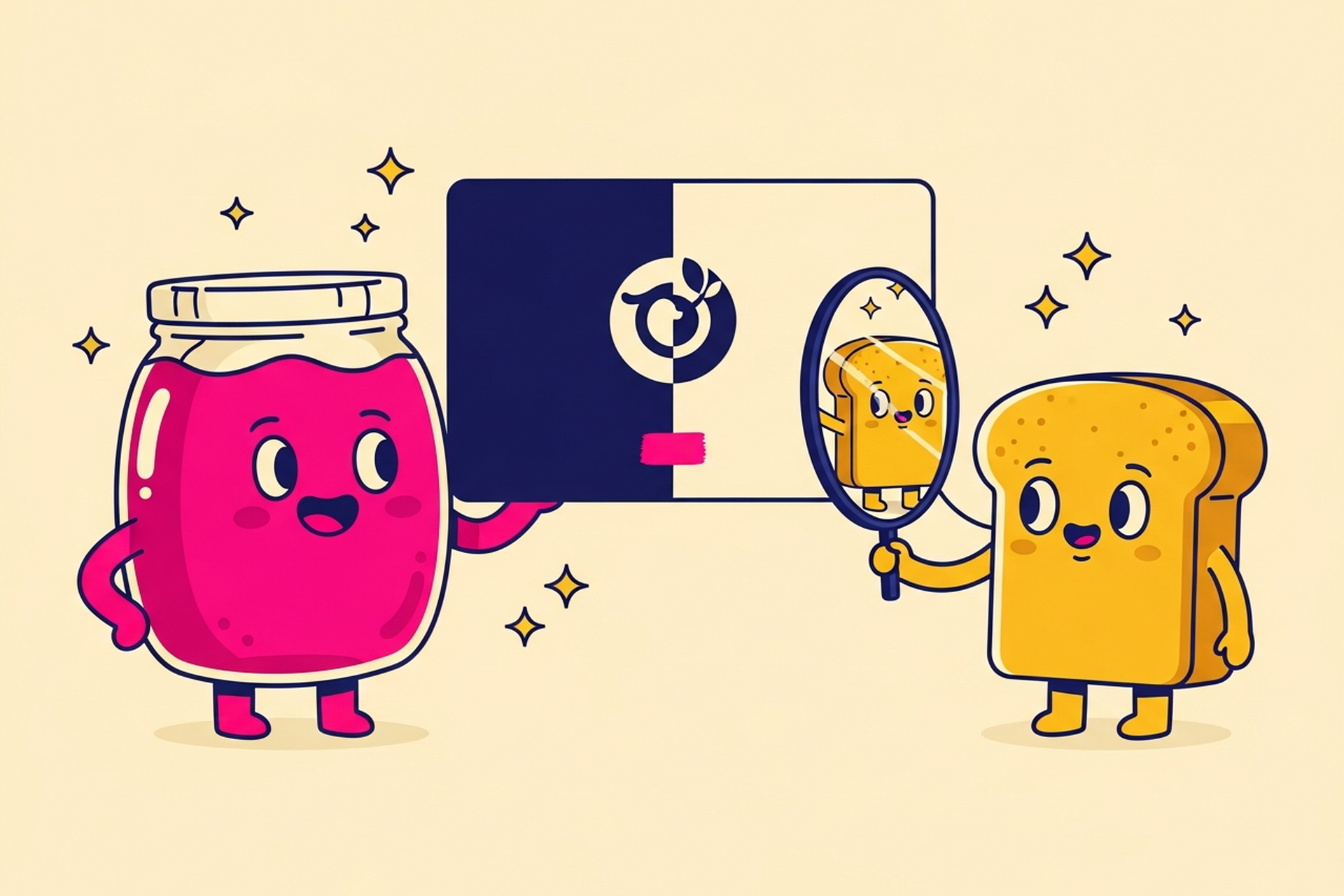
These two terms get used interchangeably in marketing conversation, but they describe fundamentally different things — and confusing them leads to poor decisions about when and how to invest in brand work.
Here's the clear distinction, why the gap between them matters, and what to do about it.
Brand identity is everything your company deliberately creates to express who you are. It's what you control:
Brand identity is intentional and controlled. You define it, design it, document it, and apply it. A skilled designer can change it. A strong brand guidelines document makes it consistent.
Brand image is the perception that actually exists in your audience's minds. It's formed by every interaction someone has with your company — the product, the customer service, the word-of-mouth from their network, what they read in reviews, how they've felt using your tool.
Brand image is aggregate and earned. You don't control it directly. You influence it through the quality of your product, the consistency of your delivery, and the alignment between your brand identity and what you actually provide.
The one-line version: identity is the promise, image is the verdict.
Most brand problems aren't identity problems. They're gap problems.
When your identity is stronger than your image. You've invested in a beautiful brand system. The logo is solid, the website is polished, the pitch deck is excellent. But customers are churning, reviews are mediocre, and no one is talking about you. The brand looks like it promises more than the product delivers. Spending more on design won't fix this — the gap is in product and experience, not identity.
When your image is stronger than your identity. Some companies build real reputation and loyalty before they build a coherent visual system. If your customers love you but your visual brand doesn't match the quality they associate with you, you're losing the amplification effect good identity provides. Referrals get harder to convert when the landing page and materials don't look the part.
When they're simply misaligned. A fintech company that actually serves adventurous independent investors but whose brand identity looks like a conservative institutional bank is speaking to the wrong person. The image that builds in the market doesn't match the audience you're trying to reach.
If you're wondering whether your brand issues are identity issues or image issues, ask these questions:
What do customers say about you when you're not in the room? If they love the product but don't talk about the brand, the image is building but the identity isn't capturing it. If they describe you using adjectives that don't match how you'd describe your brand, there's misalignment.
What happens when new people encounter your brand cold? Show someone who doesn't know your company your website, your deck, your social profile. What impression do they form? Does it match who you actually are? If the cold impression is wrong, it's an identity problem.
What's your retention like versus your acquisition? High churn suggests image problems — the product isn't delivering what the brand promises. Weak acquisition despite good word-of-mouth suggests identity problems — the brand isn't presenting itself in a way that converts unfamiliar prospects.
If your image is weaker than your identity: The design is fine; the product and experience need work. This is beyond the scope of brand design.
If your identity is weaker than your image: This is the solvable design problem. Building a brand identity system that matches the quality, personality, and reputation you've earned in the market is the assignment. The goal is to make the way you look as good as the way your customers already feel about you.
If they're misaligned: The first step is understanding which is right — what the brand should actually be — and then bringing the lagging one in line. Often this requires both strategic positioning work and visual identity redesign.
Companies that maintain brand consistency and alignment between identity and image see measurable revenue impact in acquisition, retention, and pricing power. It's not an abstract benefit.
Once you've diagnosed which side the problem is on, the work to close the gap is usually more concrete than it sounds.
If identity is weaker than image: Start with the element that's most visually prominent in your current context. For most companies, that's the website. A website redesign that accurately reflects the quality of the product tends to create an immediate lift in first-impression conversion. From there, extend to pitch decks, social profiles, and marketing materials. You don't need to rebuild everything at once. Prioritize by how often prospects encounter each touchpoint.
If image is weaker than identity: This is a harder problem, and one that design alone doesn't solve. Look for the specific places where experience falls short of the promise. Onboarding friction, slow support response, product gaps relative to what's marketed. Brand identity that overpromises creates a trust deficit that compounds. The fix is usually a combination of adjusting what the identity promises and improving what the product delivers.
If they're misaligned: Bring the right people into the same room. A brand misalignment conversation is almost always also a product strategy and marketing strategy conversation. The question isn't just "what should the logo look like" but "who are we actually for, and does everything we do reflect that."

When identity and image are aligned, design work across every touchpoint reinforces the same perception. That repetition builds recognition, and recognition builds trust.
Brand alignment isn't a one-time fix. It's an ongoing practice. As companies grow, the identity tends to lag behind the image (you've earned more trust than your brand communicates) or the image lags behind the identity (you've invested in a polished system that the product hasn't grown into yet).
The most brand-aware companies revisit alignment regularly, especially at inflection points: new funding, new product, new audience, new competitive landscape. Treating brand alignment as a periodic review rather than a one-time project is what keeps the investment compounding.
If the visual identity side of this equation needs work, Jamm builds brand identity systems as part of a design subscription. See our branding work or book a call to discuss where the gap is.
Hire a team of top level professionals for less money than hiring a single designer. Stupid simple design subscription service to level-up your business!
Looking forward to potentially working with ya ✌️


